Trees rarely fail without warning. Before a winter storm brings heavy snow, ice, and strong winds, most damaged trees show clear signs of weakness. Homeowners who know what to look for can take action early and prevent property damage, power outages, and dangerous emergency situations.
The most common warning signs of tree damage before a winter storm include dead or hanging branches, cracks in the trunk, leaning trees, exposed roots, fungal growth, hollow areas, and trees growing too close to structures or power lines. Identifying these signs early reduces the risk of tree failure during severe winter weather.
This guide explains how winter storms affect trees, how to tell the difference between a healthy tree and a damaged one, and when professional help becomes necessary.
Why Winter Storms Are So Hard on Trees
Winter storms place extreme stress on trees in a short period of time. Snow adds weight to branches. Ice increases pressure and brittleness. Wind creates force that pushes trees beyond their structural limits. At the same time, frozen or saturated soil weakens the root system that normally keeps trees anchored.
Healthy trees are flexible and well-balanced. Damaged trees are not. When winter weather arrives, existing weaknesses are exposed quickly, often leading to broken limbs or complete tree failure.
How Trees Commonly Fail During Winter Storms
Tree failure during winter storms usually follows predictable patterns. Understanding these patterns helps homeowners recognize danger before it turns into an emergency.
Trees typically fail when:
- Heavy snow or ice overloads branches
- Cracks in the trunk expand due to freezing temperatures
- Wind pushes against an already leaning tree
- Roots lose grip in frozen or waterlogged soil
These failures are rarely sudden without cause. Most are the result of damage that existed long before the storm.
Common Warning Signs of Tree Damage Before a Winter Storm
Before winter weather arrives, homeowners should inspect their trees for visible changes. The following warning signs indicate a higher risk of failure during snow, ice, or wind events.
- Dead or hanging branches
- Cracks in the trunk or major limbs
- Leaning or tilting trees
- Exposed roots or lifted soil at the base
- Mushrooms or fungal growth near the trunk
- Hollow sections or cavities
- Bark splitting or peeling
- Trees growing close to homes, vehicles, or power lines
A tree showing multiple warning signs should be evaluated by a professional before a storm hits.
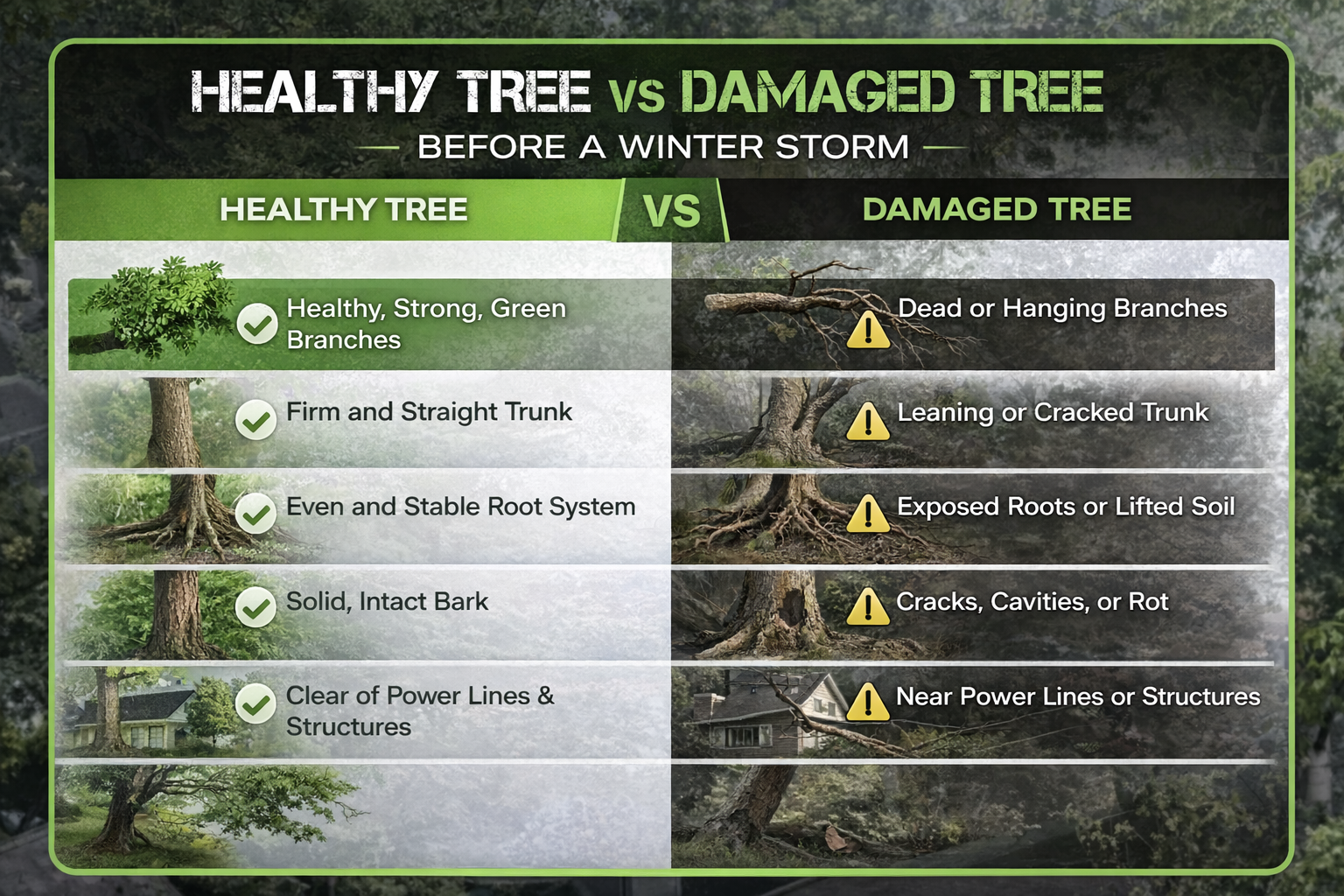
Healthy Tree vs Damaged Tree Before a Winter Storm
A healthy tree and a damaged tree behave very differently under winter stress. A healthy tree has strong branches, a solid trunk, and a stable root system that can handle snow loads and wind pressure. A damaged tree lacks this strength and balance.
A healthy tree typically has:
- Green, flexible branches
- A straight, stable trunk
- Firm soil around the base
- Intact bark
- Safe distance from structures and power lines
A damaged tree often shows:
- Dead or hanging limbs
- Cracks or splits in the trunk
- Leaning posture
- Exposed or weakened roots
- Signs of decay or rot
This difference becomes critical during winter storms, when added weight and wind force push trees to their breaking point.
Dead or Hanging Branches
Dead branches are one of the most dangerous warning signs. They are brittle, weak, and unable to support added weight from snow or ice. Even moderate winter weather can cause dead limbs to snap and fall without warning.
Branches hanging over roofs, driveways, sidewalks, or parked vehicles create a serious safety risk. During winter storms, these branches often break first.
Cracks in the Trunk or Major Limbs
Cracks in a tree’s trunk or large limbs indicate structural weakness. These cracks may be caused by past storms, lightning, or internal decay. Cold temperatures make cracks worse by causing wood to contract and expand repeatedly.
During a winter storm, ice and wind can force these cracks to widen, leading to sudden splitting or complete trunk failure.
Leaning or Tilting Trees
A tree that suddenly leans or leans more than it did before should never be ignored. Leaning often means the root system is compromised or the soil has shifted.
Winter storms increase the risk because frozen or saturated ground provides less support. When snow and wind push against a leaning tree, it may fall without warning.
Exposed Roots and Soil Heaving
Roots are the foundation of a tree. When roots become exposed or the soil around the base lifts or cracks, stability is lost.
Frozen ground reduces root flexibility, while melting snow can oversaturate soil. Both conditions make uprooting more likely during winter storms, especially in high winds.
Fungal Growth and Tree Decay
Mushrooms or fungal growth near the base of a tree often indicate internal decay. This decay weakens the tree from the inside, reducing its ability to support its own weight.
A tree with internal rot may look healthy on the outside but fail suddenly under winter stress. These trees are among the most dangerous during ice and snow events.
Hollow Trunks and Cavities
Hollow areas or large cavities reduce the structural strength of a tree. Wildlife nesting holes, visible decay, or open cavities are signs that internal wood is missing or damaged.
During winter storms, hollow trees are more likely to snap or collapse because they lack internal support.
Trees Near Power Lines or Structures
Tree location plays a major role in winter storm risk. Even a partially damaged tree becomes dangerous if it is close to a home, garage, fence, or power line.
Branches weighed down by ice can fall onto structures or electrical lines, causing outages or fires. In these situations, professional evaluation is critical.
When Does Tree Damage Become an Emergency?
Tree damage becomes an emergency when there is an immediate risk to people or property. This includes situations where a tree is leaning toward a structure, large branches are hanging overhead, or cracks are actively widening.
Other emergency signs include roots lifting from the ground or trees contacting power lines. In these cases, contacting a professional emergency tree service immediately can prevent serious damage or injury.
Why Ignoring Tree Warning Signs Can Lead to Bigger Problems
Ignoring early warning signs of tree damage often leads to more serious and costly problems during winter storms. Small issues like dead branches, minor cracks, or slight leaning rarely fix themselves. When snow, ice, and strong winds add extra weight and pressure, these weaknesses can quickly turn into full tree failure.
Delaying action also increases safety risks and financial impact. Emergency removals during storms are more dangerous, more complex, and often more expensive than preventive care. In many cases, neglecting early signs results in extensive property damage and the need for storm damage tree cleanup after severe winter weather. Taking action before conditions worsen helps protect your home, reduces liability, and prevents avoidable emergencies.
What Homeowners Should Do Before a Winter Storm
Preparation reduces risk. Before winter weather arrives, homeowners should walk their property and look for visible changes in trees.
Simple steps include checking for new cracks, leaning, dead branches, or exposed roots. Avoid attempting to cut or trim trees yourself, especially in cold or icy conditions.
If a tree shows multiple warning signs, calling an emergency tree pickup service before the storm is the safest option.
The Role of Professional Tree Inspections Before Severe Weather
Certified arborists and professional tree services can identify hidden risks that homeowners may miss. Inspections often include evaluating tree structure, root stability, decay, and proximity to structures.
Professional assessment before a winter storm reduces the chance of emergency situations and helps protect homes, vehicles, and people.
Conclusion: Early Tree Warning Signs Should Never Be Ignored
Winter storms are unpredictable, but tree failure is often preventable. Trees communicate problems through visible signs long before snow and ice arrive. Dead branches, cracks, leaning, decay, and root damage are all warnings that should be taken seriously.
Recognizing these signs early and acting responsibly protects property, reduces emergency risks, and ensures safer winter weather for everyone.